100 Challenging Sudoku Puzzles: A Journey Through Logic and Fun
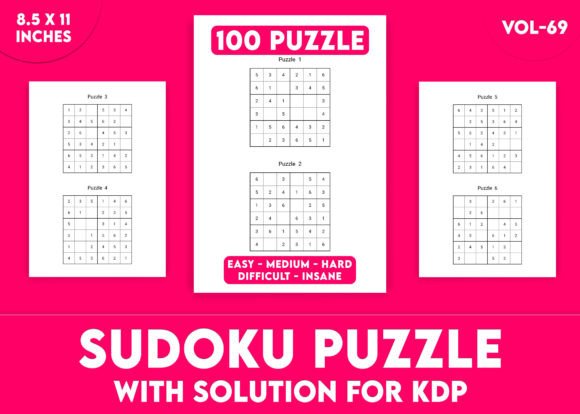
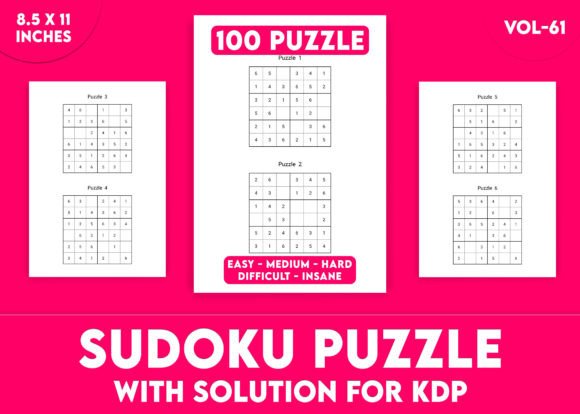
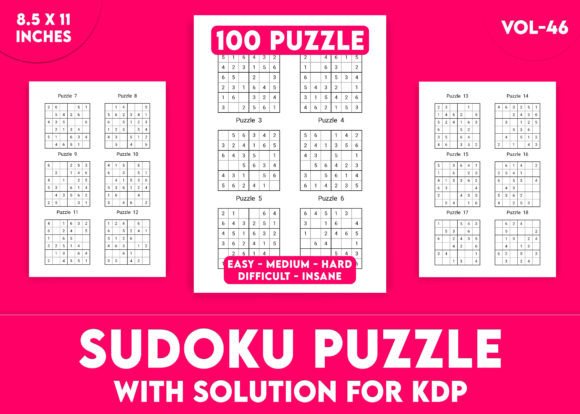
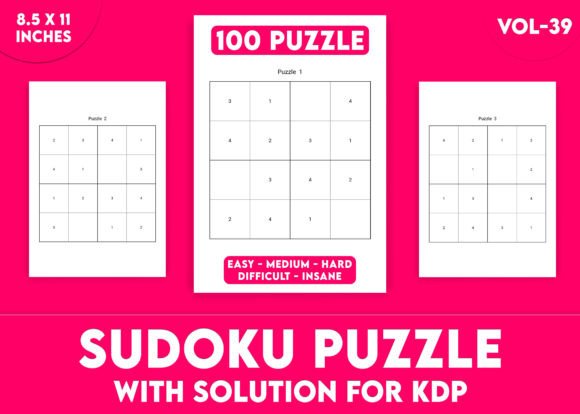
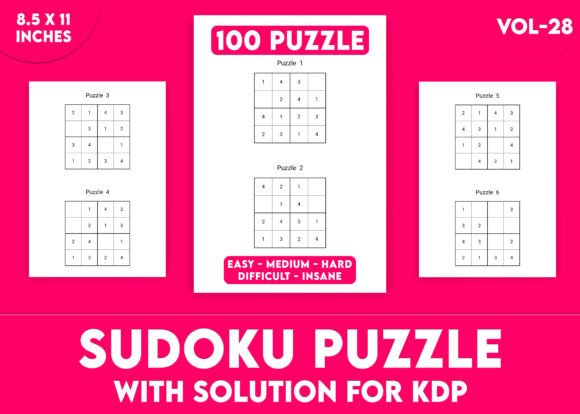
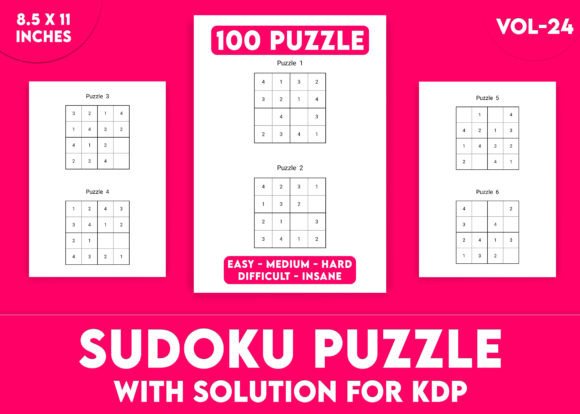
Sudoku puzzles have become a beloved pastime for people of all ages, offering a perfect blend of mental challenge and entertainment. Whether you're a beginner looking to sharpen your logical thinking or an experienced solver seeking new challenges, 100 Challenging Sudoku Puzzles is the ideal companion. This collection, part of the KDP Interior Vol-24, features 100 carefully crafted puzzles designed to test your skills and provide hours of engaging fun. With its large 8.5 x 11-inch size, this book offers a comfortable layout that's easy on the eyes and perfect for solving anywhere.
Designed with both beginners and seasoned solvers in mind, this book ensures a balanced mix of difficulty and solvability. Each puzzle is structured to encourage critical thinking, pattern recognition, and problem-solving skills—key abilities that can be applied in various aspects of life, from work to daily decision-making.
What Makes Sudoku Unique?
Sudoku is a number-based logic puzzle that originated in Japan but has roots in earlier mathematical games. The objective is simple: fill a 9x9 grid so that each row, column, and 3x3 subgrid contains all the digits from 1 to 9 without repetition. Despite its simplicity, Sudoku requires careful analysis, patience, and strategic thinking.
Unlike other puzzles that may rely on guesswork, Sudoku is purely logical. Every puzzle has a unique solution that can be reached through deduction and reasoning. This makes it an excellent tool for improving cognitive abilities and maintaining mental sharpness.
The appeal of Sudoku lies in its accessibility. It doesn’t require any special knowledge or advanced math skills—just a keen eye for patterns and a willingness to think critically. Whether you’re solving a puzzle during a break at work or relaxing on a weekend, Sudoku offers a way to unwind while still stimulating your brain.
The Purpose and Significance of Sudoku
Sudoku is more than just a game—it’s a mental exercise that can help improve memory, concentration, and problem-solving skills. Regularly engaging with Sudoku puzzles has been linked to enhanced cognitive function, especially in older adults. Studies suggest that such activities may help delay the onset of age-related cognitive decline.
In educational settings, Sudoku is often used as a tool to teach logical reasoning and reinforce basic math concepts. Teachers incorporate it into classroom activities to make learning more interactive and enjoyable. For students, solving Sudoku puzzles can be a fun way to practice attention to detail and develop perseverance.
For professionals, Sudoku can serve as a form of mental relaxation. In high-stress environments, taking a few minutes to solve a puzzle can help clear the mind, reduce anxiety, and boost productivity. It’s a quick and effective way to recharge mentally without requiring much time or effort.
Why Choose This Book?
100 Challenging Sudoku Puzzles stands out for several reasons. First, it offers a wide range of difficulty levels, ensuring that there's something for everyone. From easy puzzles that are great for beginners to more complex ones that will keep experts engaged, this collection caters to all skill levels.
The book also includes solutions for every puzzle, making it an excellent resource for learning and self-assessment. Whether you're trying to understand a particular technique or want to check your answers, having the solutions available helps reinforce your understanding and build confidence.
Another key feature is the editable PDF file included with the book. This means you can easily print the puzzles or work on them digitally, giving you the flexibility to solve them on your computer, tablet, or smartphone. The large 8.5 x 11-inch size ensures that the grids are spacious and easy to read, reducing eye strain and making the experience more enjoyable.
How Sudoku Fits Into Modern Life
In today’s fast-paced world, finding moments of mental clarity and focus is more important than ever. Sudoku provides a welcome escape from the constant demands of technology and daily life. It’s a low-pressure activity that allows you to disconnect from distractions and immerse yourself in a task that requires full attention.
Sudoku also aligns with the growing interest in mindfulness and stress reduction. Many people use puzzles like Sudoku as a form of meditation, using the repetitive and structured nature of the game to calm their minds and improve their mood. It’s a simple yet powerful way to practice presence and stay grounded.
Moreover, Sudoku has found its place in digital spaces as well. Mobile apps, online platforms, and even smart devices now offer Sudoku puzzles, making it easier than ever to access and enjoy. This adaptability ensures that the puzzle remains relevant and accessible across different generations and lifestyles.
Common Misconceptions About Sudoku
Despite its popularity, there are some common misunderstandings about Sudoku. One of the most frequent is the belief that it requires advanced math skills. In reality, Sudoku is based on logic rather than arithmetic. While numbers are used, the puzzle doesn’t involve calculations like addition or multiplication. Instead, it relies on pattern recognition and deductive reasoning.
Another misconception is that Sudoku is only for people who enjoy math or puzzles. This couldn’t be further from the truth. Sudoku appeals to a wide audience because it’s accessible, challenging, and rewarding. Whether you’re a fan of crosswords, chess, or even video games, you’ll likely find something to appreciate in Sudoku.
Some people also assume that Sudoku is too difficult to learn. However, with practice and patience, anyone can master the basics. Starting with simpler puzzles and gradually working up to more complex ones is an effective way to build confidence and improve skills over time.
Getting Started With Sudoku
If you’re new to Sudoku, don’t worry—getting started is easier than you might think. Begin by familiarizing yourself with the rules and the structure of the grid. Look for cells that have the most clues, as these are usually the easiest to fill in first. As you progress, you’ll start to notice patterns and strategies that can help you solve more complex puzzles.
One helpful tip is to use pencil marks to note possible numbers in each cell. This technique, known as "candidate elimination," allows you to keep track of potential values and eliminate options as you go. It’s a useful strategy that becomes second nature with practice.
Remember, the goal is not just to complete the puzzle but to enjoy the process. Take your time, stay patient, and celebrate each small victory. Over time, you’ll find that solving Sudoku becomes more intuitive and satisfying.
Conclusion
100 Challenging Sudoku Puzzles is more than just a book—it’s an invitation to explore the world of logic, strategy, and fun. With its diverse range of puzzles, clear layout, and practical features, it’s an excellent choice for anyone looking to enhance their mental agility or simply enjoy a good challenge.
Whether you're a lifelong puzzle enthusiast or a curious newcomer, this collection offers something for everyone. So why wait? Grab your copy of 100 Challenging Sudoku Puzzles today and start unraveling the mysteries of these captivating numerical puzzles. Challenge yourself, relax, and discover the joy of Sudoku.